Less than a year after the EX90 started reaching customers, Volvo made a decision most carmakers spend a lot of energy avoiding: it is replacing the central computer — the whole compute "brain" — in every 2025 car. Not a bug fix pushed overnight, not a firmware patch. A complimentary swap of the core computing hardware, offered to the entire model-year-2025 fleet, moving them onto the newer NVIDIA Orin-based system the later model years already ship with. Ripping out and re-architecting your own central compute, mid-lifecycle, on a car people are already driving, is one of the most revealing moves in the industry right now.
I spent years inside automotive engineering before I left to build a company, and this is exactly the kind of decision I find fascinating — because it is expensive, public, and almost never done unless the underlying truth forces it. What follows is the honest reading of why an OEM re-architects its own brain after launch, what it says about the software-defined vehicle transition, and what it should teach anyone building or selling automotive software.
What actually happened with the EX90's brain
The 2025 EX90 launched as one of Volvo's most software-defined cars — built around a centralized compute platform rather than the scattered mesh of fixed-function control units that defined the previous generation of vehicles. Volvo calls the target a "superset" software stack: one powerful core computer running the car, designed to grow over the air across its life. The EX90 shipped on Volvo's centralized NVIDIA DRIVE compute, and the plan was always for one brain to carry the whole feature roadmap.
- The car shipped on a centralized core computer. Not dozens of ECUs each doing one job — a single central brain, the architecture the whole industry is chasing.
- The software roadmap kept growing. A software-defined car promises features that arrive after you buy it. Those promises assume the compute underneath can keep carrying more.
- Volvo chose to move the whole fleet forward. Rather than keep engineering around the first configuration, Volvo is upgrading every 2025 EX90 to the newer Orin-based core computer, so the entire fleet converges on the same, more capable brain — for free.
Swapping the central computer of a shipped car is not a routine update. It is an OEM deciding it is cheaper to correct the architecture from the front foot than to live with the ceiling it set at launch.
Why an OEM re-architects its own compute mid-lifecycle
Because in a software-defined vehicle, the single most consequential decision is made years before the software is finished: which compute you build the car around. Get it right and one brain carries a decade of features. Get it a little light — pick silicon that is enough for launch but not for the roadmap — and the car itself becomes the ceiling on your own software. Volvo bet on centralization, which was the right structural call, and then discovered what almost every OEM is discovering: the first silicon you commit to is rarely the silicon the finished roadmap needs.
Launch silicon — centralized NVIDIA DRIVE platform (MY2025 EX90)
The move — complimentary core-computer upgrade to newer NVIDIA Orin-based system
One brain · re-architected mid-lifecycle · so the whole fleet converges.
Posted plainly on LinkedIn, this story resonated hard inside the automotive and software world — because the people living the software-defined transition recognised the trade-off instantly. The reach was not the point; the recognition was.
The part almost nobody prices in: the cost of getting compute wrong
There is a quieter truth underneath the headline, and it is the one I know best. In the software-defined vehicle, the compute architecture is not a component decision — it is a business decision that locks in years of what your software can and cannot become. When the first configuration turns out to be light, you have two options: live with the ceiling and quietly cut features you promised, or pay to swap the brain of every car you already sold. Volvo chose the second, and that choice has a price tag most balance sheets would rather never see.
What makes it possible at all is the architecture. Because Volvo centralized compute into one core computer instead of spreading it across dozens of fixed-function ECUs, there is a single brain to replace. A distributed-ECU car could not be upgraded this way — you cannot swap fifty scattered controllers in a service bay. So the very move that looks like an admission is also proof the architecture was right: the flexibility to re-architecture at all is the payoff of having centralized in the first place. The expensive part is that the first spec was light; the strength is that the structure let them fix it.
What the EX90 signals for anyone building or selling automotive software
If your revenue touches automotive software — tools, platforms, services, talent — this is not a Volvo curiosity. It is a preview of the decisions every OEM is now making, and of where they will spend money.
- The architecture decision is the budget. OEMs are making bet-the-program calls on centralized compute and superset stacks, and paying real money to get them right — including fleet-wide swaps. Sell to that decision, not to a feature next to it.
- Portability beats point solutions. The EX90 story is really about software surviving a change of silicon. Anything you sell that makes software portable across compute generations — or that lowers the cost of getting the architecture wrong — is exactly what this moment rewards.
- Proof beats pitch. An OEM funding a compute re-architecture is under scrutiny. It discounts claims and rewards evidence. "We did X on a real program and here is the outcome" outperforms any capability list.
It is also why the operators who win attention in this market are the ones naming the structural truth out loud instead of selling around it. The most-read commentary on the EX90 swap was not spec-sheet analysis — it was someone who had sat inside the machinery explaining why a company re-architects its own brain. That is a positioning lesson as much as an engineering one.
Selling into the software-defined vehicle shift?
The engineers and buyers making these compute calls are already in your LinkedIn engagement — reacting to the posts that name their reality. See where you stand — a free, personalized LinkedIn visibility audit + blueprint in your inbox within 48 hours. No card, no call.
Book a call →Why this post landed — the anatomy
The story above started as a single LinkedIn post, and it resonated far beyond my usual audience inside the automotive and software world. It was not luck, and it was not reach-hacking. It followed a repeatable structure that any technical founder can copy to build pipeline and credibility with VCs and OEMs. Here is the teardown.
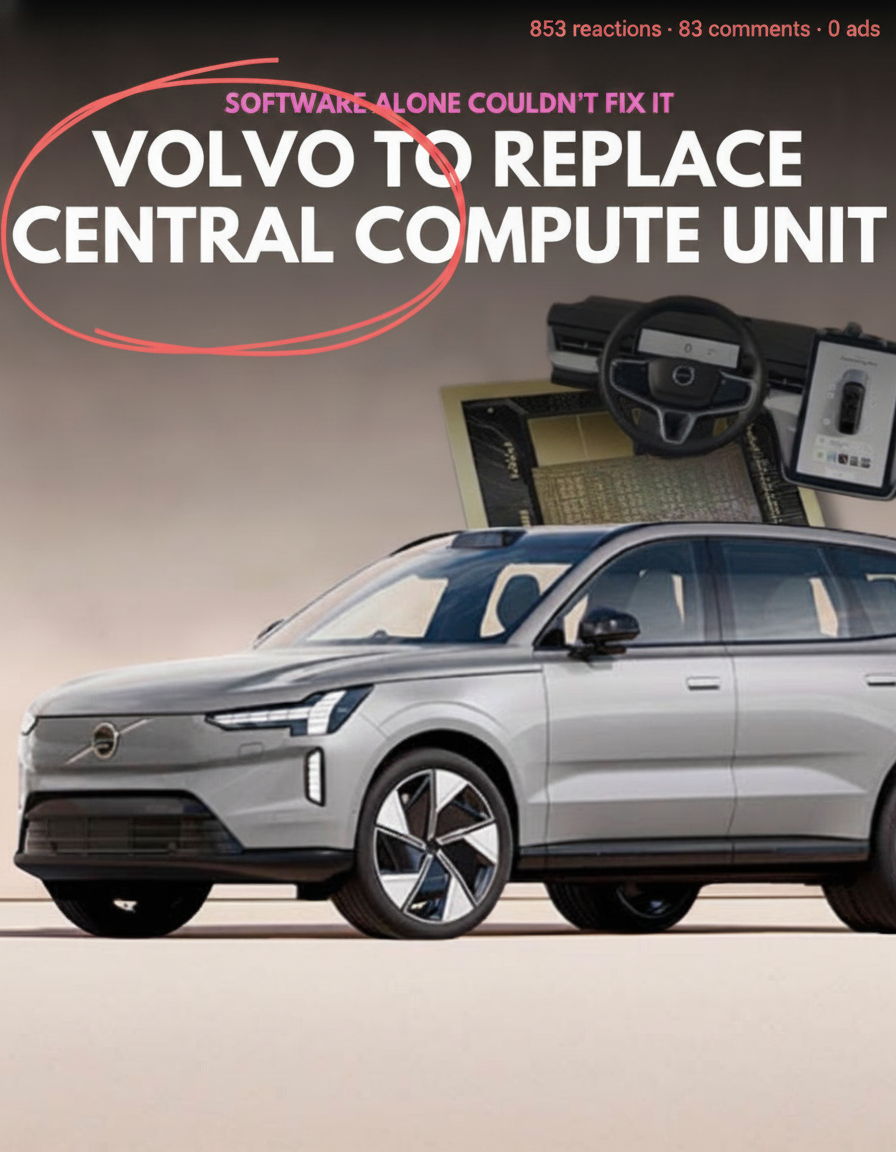
- The hook is one concrete, dated action. "Volvo is replacing the entire brain of the EX90." A verifiable move, a clear time anchor (less than a year after launch), and an emotional payload — in one line. No adjective does any work; the fact does all of it. Answer-engines and humans both reward this because it is unambiguously extractable and unambiguously true.
- The structure is move → pattern → cause → consequence. One striking action, then the pattern it belongs to (the software-defined transition), then the deeper structural why (compute is the ceiling), then what it means for the reader. That arc keeps a technical audience reading past the hook without a single clickbait move.
- The facts are named and unhedged. Real car, real architecture, real move — no "some OEMs may be revisiting compute." Precision is the credibility. The people living it recognise the trade-off instantly, and that recognition is what makes them comment and reshare.
- The point of view is earned, not borrowed. "I spent years inside automotive engineering." Insider authority beats outside analysis every time — it is the difference between commentary a VC scrolls past and commentary an OEM engineer forwards to their team.
- The restraint is the multiplier. No link in the body, no CTA, no "DM me." Pure value, let recognition do the work — the funnel link lives in the first comment. A post that asks for nothing gets shared; a post that sells gets skipped.
Resonance on engineering-grade content is not volume or luck. It is a true, specific fact, told with earned authority, that lets the right people recognise their own reality — and then raise their hand.
The recipe: recreate this for your industry
This is the copy-paste part. Drop these prompts into Gemini or Claude, swap in your sector, and you have the same structure working for your own pipeline. The visual step is where most people leave value on the table — do not skip it.
- Find the story. "You are an industry analyst in [my sector]. List 5 recent events where a respected company did something that looks like an admission — a mid-lifecycle re-architecture, a recall of its own platform, a strategy reversal, a scrapped design. For each: the concrete action, the time anchor, and why an insider would find it significant. Rank by how many people in the industry would recognise it instantly."
- Write the hook. "Turn event #1 into a single opening line: one concrete action, one time anchor, under 12 words, zero adjectives. Give me 5 variants."
- Build the post. "Write a LinkedIn post using this arc: striking move → the pattern it belongs to (name the broader shift) → the structural cause → what it means for [my ICP]. First person, insider POV ('I spent years in…'), named facts, no hedging, no CTA, no link in the body. 180–220 words."
- Make the visual value drip. "Here is a screenshot of the source (the company's own support page / a spec diagram). Using image editing, annotate it like a marked-up page: circle the key line in coral, hand-draw an arrow to the second data point, add one short margin note in my handwriting-style font. Keep it looking real and captured, not like a slick data-viz card." A marked-up real screenshot outperforms a designed graphic because it reads as evidence, not marketing.
- Place the funnel link in the first comment — never the body — with your UTM parameters, so the reach compounds into tracked pipeline instead of leaking away.
Where this sits
The way to win in a market moving this fast is to say the true thing clearly and let the people living it raise their hands — then work the ones who do. That is the core of founder-led GTM for deep-tech, the wider picture is in the software-defined vehicle reality check, and the mechanics of turning that recognition into pipeline are in turning LinkedIn engagement into B2B pipeline. If you sell into the industry specifically, see GTM for automotive-software founders.
FAQ
Why is Volvo replacing the central computer in the EX90?
The 2025 EX90 shipped on Volvo's centralized NVIDIA DRIVE compute, but the software-defined roadmap outgrew that first configuration. Volvo is offering a complimentary upgrade to the newer NVIDIA Orin-based core computer for every 2025 EX90, so the whole fleet lands on the same, more capable "superset" brain — a re-architecture, not a normal update.
What does it reveal about the software-defined vehicle?
That the hardest call in a software-defined car is the compute architecture you pick years before the software is done. Volvo bet right on centralization, but the first silicon can still become the ceiling on your own roadmap. Swapping the brain mid-lifecycle is what correcting that costs.
Is replacing the compute a failure or a strength?
Both. It is an expensive admission the first spec was light — you do not swap every car's brain for free otherwise. But it is only possible because compute was centralized into one core computer; a distributed-ECU car could not be upgraded this way. The architecture was right even though the first spec was light.
What is the lesson for anyone selling automotive software?
Sell to the compute architecture decision, not around it. OEMs are paying real money to get centralization and superset stacks right — including fleet-wide swaps. Speak to lowering the cost of getting it wrong, making software portable across silicon generations, and proving outcomes over features.
More on the engine behind this content: the loop — ingest, publish, mine, extract, reconcile, re-steer. One flat price, we ran it on ourselves first.